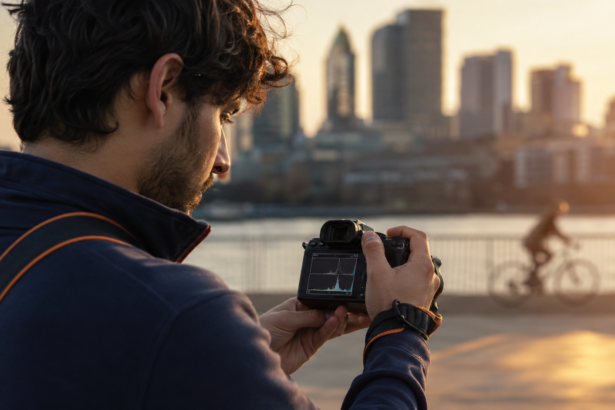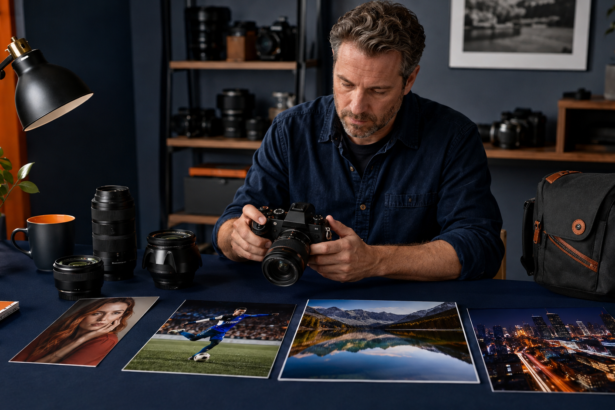


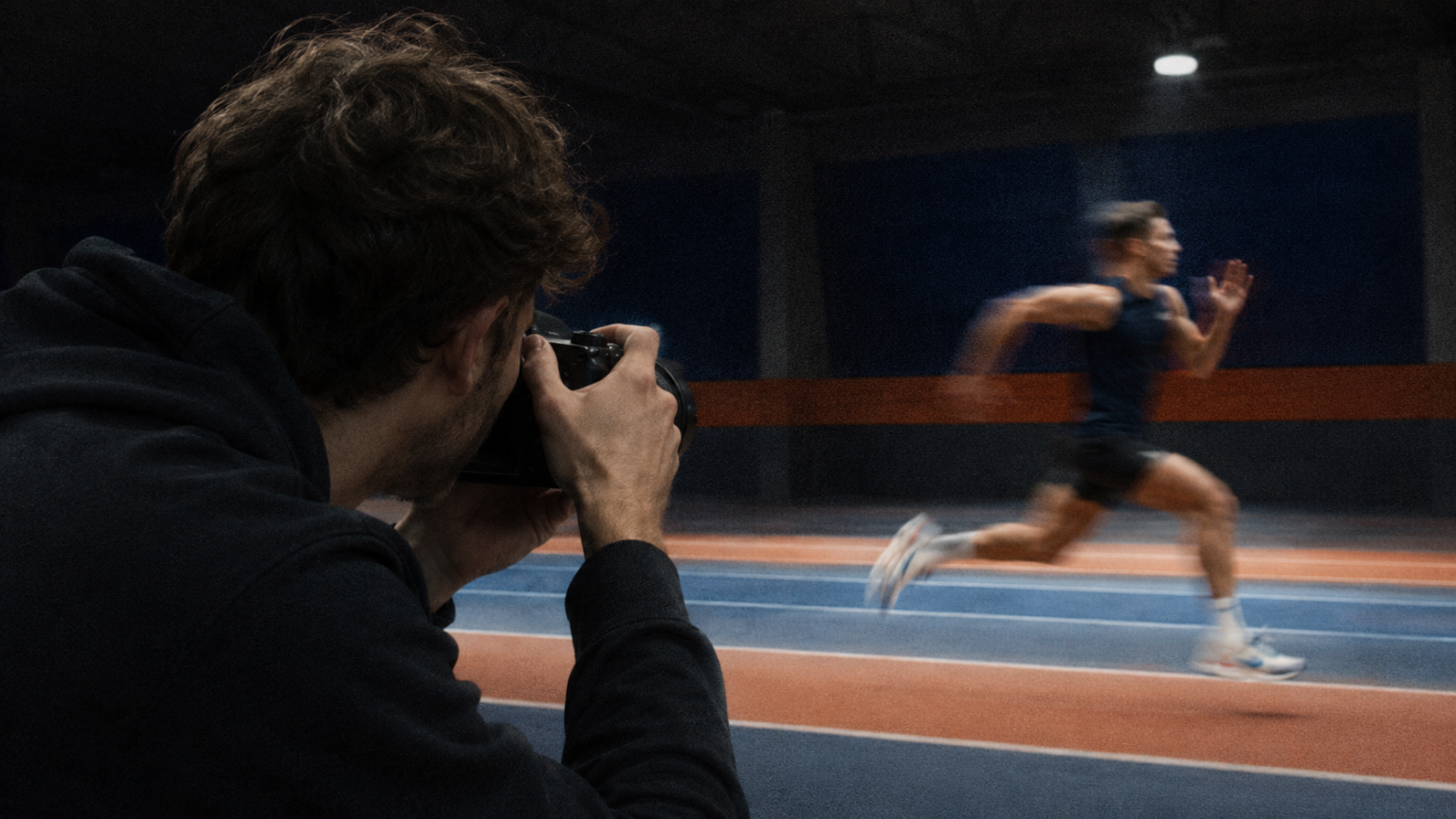
In an ISO vs shutter speed decision, choose shutter speed first when motion matters, then raise or lower ISO to support that choice. Shutter speed changes how movement is recorded. ISO changes image brightness and noise. A high-ISO sharp photograph is often more useful than a low-ISO frame blurred by slow exposure.
- ISO vs Shutter Speed at a Glance
- What Happens When You Change Shutter Speed?
- What Happens When You Change ISO?
- When Shutter Speed Should Come First
- Sports, wildlife, and active children
- Handheld telephoto photography
- Street photography in changing light
- When ISO Can Stay Low
- A Practical Decision Order
- Useful Starting Points
- How Auto ISO Helps
- Photo and Video Need Different Thinking
- Common Mistakes
- Frequently Asked Questions
- Does higher ISO let me use a faster shutter?
- Does fast shutter speed cause noise?
- Should ISO always be as low as possible?
- Why is my low-ISO image blurry?
- The Bottom Line
The goal is not to keep both numbers low. It is to use the slowest shutter speed that still delivers the motion effect you want, then select the ISO needed for a workable exposure.
ISO vs Shutter Speed at a Glance
| Setting | Changes | Does not directly change |
|---|---|---|
| Shutter speed | Motion blur, camera shake, captured light | Depth of field |
| ISO | Rendered brightness, visible noise, dynamic range | Subject motion |
What Happens When You Change Shutter Speed?
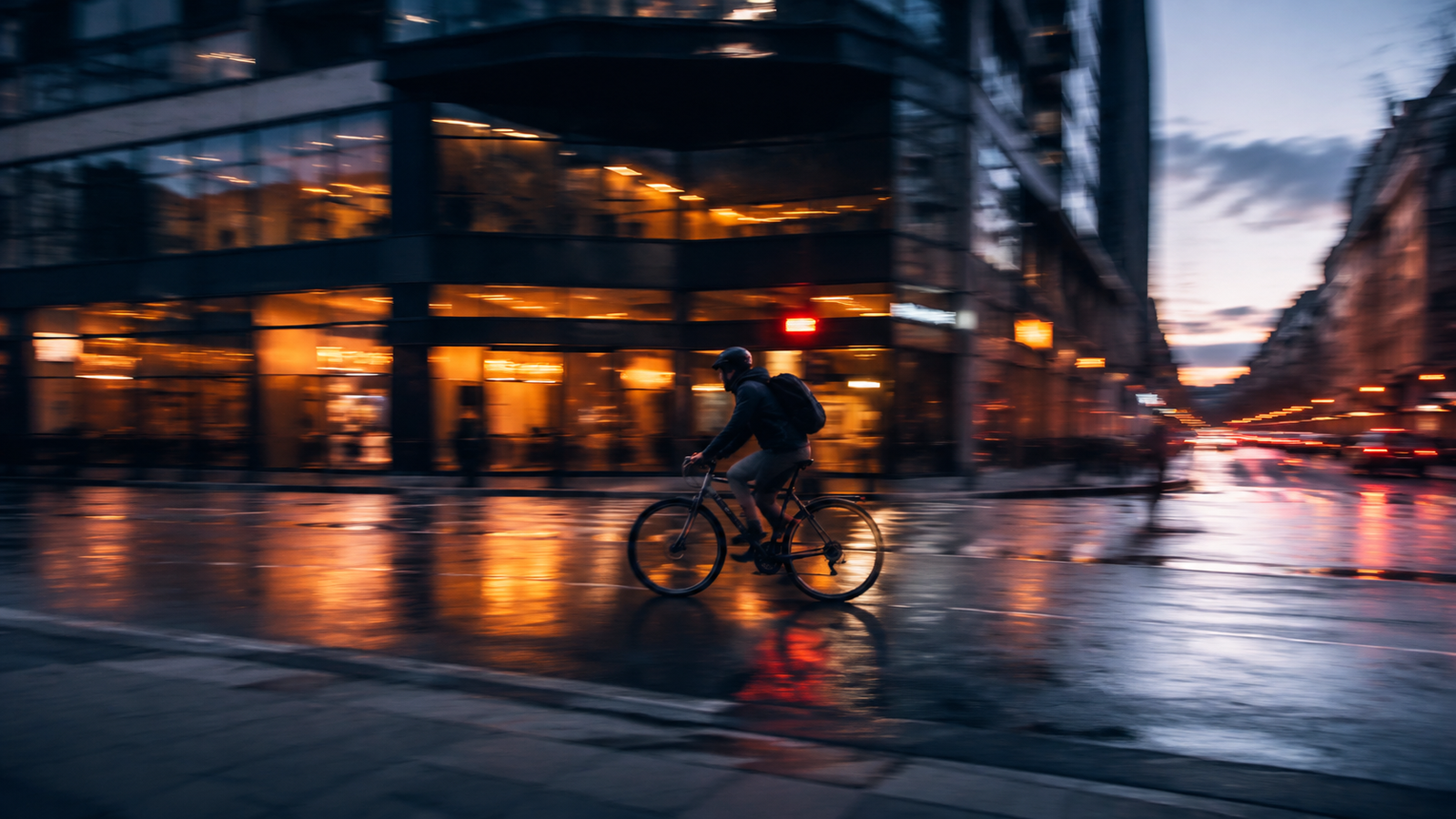
A faster shutter exposes the sensor for less time. It freezes more movement but collects less light. A slower shutter collects light for longer, but movement can create streaks or softness.
If your photographs are consistently soft, do not lower ISO first. Check whether the shutter is already too slow. The detailed guide to why all your photos are blurry includes a controlled test for repeating motion and focus problems.
What Happens When You Change ISO?
Raising ISO makes the camera produce a brighter-looking image from the captured signal. The tradeoff is more visible noise, reduced color accuracy, and less flexibility in highlights and shadows. How noticeable that becomes depends on the camera, exposure, lighting, and final viewing size.
Lower ISO generally provides cleaner files, but only when the scene allows it. If lowering ISO forces a moving subject from 1/500 to 1/60 second, the cleaner setting may create the worse photograph.
When Shutter Speed Should Come First
Sports, wildlife, and active children
Set a speed that controls the subject, often 1/500 to 1/2000 second depending on movement. Open the aperture as needed, then use Auto ISO or raise ISO manually. Noise can be managed later; strong motion blur usually cannot.
Handheld telephoto photography
A long lens magnifies hand movement. Image stabilization helps, but it does not freeze the animal or player. Choose a shutter speed that accounts for focal length and subject movement before worrying about ISO.
Street photography in changing light
Pick a minimum shutter speed that protects spontaneous movement, select the aperture for the visual style, and let Auto ISO respond as you move between sun and shade.
When ISO Can Stay Low
Landscapes on a tripod
With a stable camera and mostly still scene, set a low ISO for clean detail. Choose the aperture for depth, then allow a longer shutter speed. Wind-blown leaves and moving water may still blur, so check the scene rather than assuming every landscape is motionless.
Architecture and product photography
Supported cameras, controlled subjects, and added light let you use low ISO without sacrificing sharpness. A timer or remote release prevents movement when you press the shutter.
Intentional long exposure
When blur is the creative goal, slow shutter speed is not a defect. Use low ISO and a narrow aperture where appropriate. In bright conditions, a neutral-density filter may be required.
A Practical Decision Order
- Decide whether the subject should be frozen or blurred.
- Set the shutter speed for that effect.
- Choose aperture for depth of field.
- Raise ISO until exposure is usable.
- Take a test frame and inspect motion at a realistic viewing size.
This order is part of the wider ISO, shutter speed, and aperture workflow. When depth is the main creative choice, aperture may come before ISO instead.
Useful Starting Points
| Situation | Starting shutter speed | ISO approach |
|---|---|---|
| Still portrait outdoors | 1/250 to 1/500 | Low ISO or Auto ISO |
| Walking person | Around 1/250 | Raise as light falls |
| Children or pets playing | 1/500 or faster | Auto ISO is practical |
| Indoor event | 1/125 to 1/250 | Expect a higher ISO |
| Tripod landscape | As slow as the scene allows | Start near base ISO |
These values are starting points. Faster movement, longer lenses, and larger final displays may require more speed.
How Auto ISO Helps
Auto ISO is most useful when you know the shutter speed required but light changes quickly. Many cameras let you set a maximum ISO and minimum shutter speed. In manual exposure with Auto ISO, you can fix both motion and depth while the camera handles changing brightness.
Watch the exposure compensation control. On supported cameras, it lets you tell Auto ISO that the scene should be brighter or darker without abandoning your selected shutter and aperture.
Photo and Video Need Different Thinking
For stills, shutter speed can change freely to freeze or blur motion. Video usually needs a relatively consistent shutter speed to keep motion looking natural. At 24 frames per second, many filmmakers start near 1/48 or 1/50 second, then manage brightness with aperture, ISO, lighting, or a neutral-density filter.
If video is your priority, the mirrorless vs DSLR camera comparison covers autofocus, stabilization, recording tools, and handling.
Common Mistakes
- Keeping ISO 100 while handheld shutter speed falls too low.
- Using 1/2000 second for a still subject and creating unnecessary noise.
- Expecting stabilization to freeze a moving person.
- Judging noise at extreme zoom instead of the final output size.
- Underexposing heavily to protect a low ISO, then brightening the file several stops.
Frequently Asked Questions
Does higher ISO let me use a faster shutter?
Yes. Raising ISO can support a faster shutter at a similar rendered brightness, although noise and dynamic range may be affected.
Does fast shutter speed cause noise?
Not directly. A fast shutter captures less light, which may require higher ISO or brighter editing. Those choices can make noise more visible.
Should ISO always be as low as possible?
Use the lowest ISO that still supports the motion, depth, and brightness the photograph needs. “As low as possible” should not mean sacrificing the shutter speed.
Why is my low-ISO image blurry?
The camera probably used a slow shutter speed to compensate for reduced ISO. Increase shutter speed and raise ISO if necessary.
The Bottom Line
Shutter speed solves a motion problem; ISO solves a brightness problem. Decide how movement should look, protect the shot with an appropriate shutter speed, and use ISO to make that decision practical in the available light.
Adobe’s photography exposure guide provides more context on how ISO and shutter speed affect exposure.